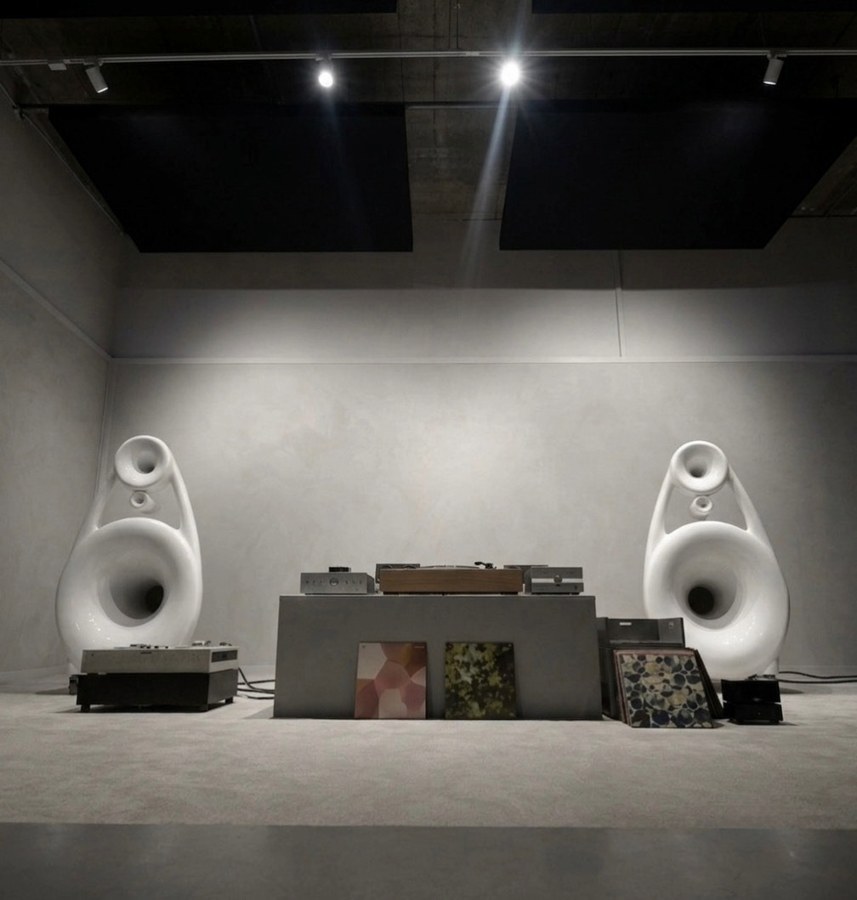
Speakers can be discreetly integrated into a space or become a deliberate part of its visual identity. The right choice depends on the room, listening brief and the way the equipment can be installed and maintained.
What Are Architectural Speakers?
Architectural speakers are designed to integrate into the building fabric or interior construction. This typically includes in ceiling, in wall and more concealed speaker formats. Their appeal is obvious. They reduce visual clutter, preserve floor space and allow the room to remain visually calm.
For architect led homes and design conscious hospitality projects, that can be extremely valuable. Technology is less likely to interrupt sightlines, compete with furniture arrangements or disrupt the material palette of the room.
The Strength of Traditional Speakers
Traditional speakers remain highly relevant where visible presence is acceptable or desirable. In some rooms, particularly dedicated listening spaces or interiors where audio equipment is part of the identity of the room, a freestanding speaker can bring both performance and character.
They also offer certain practical advantages. Positioning can sometimes be more flexible, and product choice is wider in some performance categories. In the right setting, a traditional speaker can be entirely appropriate and visually strong.
Why Architectural Audio Has Become More Attractive
The biggest shift has been performance. High quality architectural products now offer a level of refinement that has made them a serious option for projects where visual integration once required a significant sonic compromise.
This is especially useful in homes where open plan living, clean ceiling lines and carefully controlled interiors make freestanding hardware less desirable. It is equally useful in hospitality environments where the system needs to support atmosphere without becoming part of the visual noise of the space.
Appearance does not establish coverage
Compare the required listening positions and the actual model’s directional behaviour. An in-wall, ceiling, column or freestanding format is not a uniform performance category. Ask for the relevant product data and develop the layout around the use of the room.
- Architecture
- Joinery & ceilings
- Audio
- Infrastructure
When Traditional Speakers Still Make Sense

Selected work
Claude's at Chotto Matte
Architectural audio consultancy. Custom loudspeaker integration. Interior design by Superfutures Design Studio.
As featured in Mondo-DR
Traditional speakers often remain the better choice in spaces where focused listening is a primary objective or where the loudspeaker itself contributes to the identity of the room. In certain interiors, a visible speaker can feel deliberate and appropriate rather than intrusive.
This is particularly true when the client values the object quality of the speaker or when the room is designed around a more overt expression of audio.
The Hybrid Approach
Many of the strongest projects do not choose one category exclusively. They combine both.
A home may use integrated architectural loudspeakers across circulation spaces, bedrooms and kitchen areas, while using a more expressive speaker solution in the principal reception room. A hospitality project may favour concealed audio in most zones while allowing more visible loudspeakers in a bar or private room where stronger character is desired.
This tends to produce a more intelligent result because the system is responding to the specific needs of each space rather than forcing one solution everywhere.
Choose the role of the equipment
For a focused stereo room, a visible pair may be part of the listening experience. For whole-home playback or a venue, discreet integration may suit the brief; a hybrid approach may also be appropriate. The choice should join listening priorities, visual intent, installation and maintenance rather than declare one format superior.