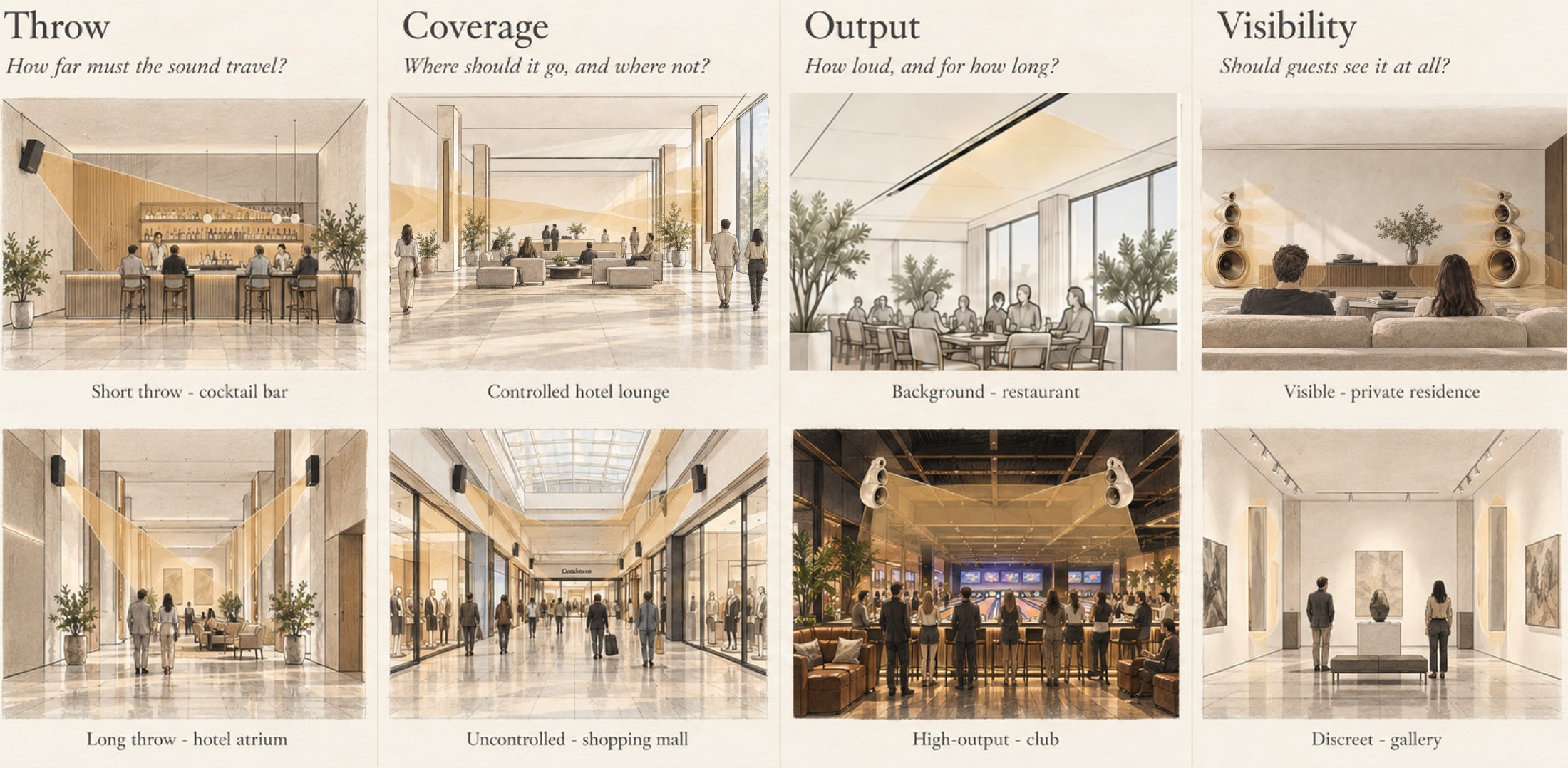
A hotel lounge, restaurant and bar may need different audio behaviour even when they belong to the same brand. The system brief should describe those differences before equipment is selected.
The Best System Is the One That Fits the Venue
Hospitality systems need to be judged across several criteria at once.
The first is performance. Coverage, tonal balance, control and long term reliability all matter. The second is integration. The system has to sit properly within the architecture and interior design. The third is usability. Staff need to be able to run it with confidence. The fourth is atmosphere. The system must support the identity of the venue rather than feeling generic.
A technically impressive system can still be wrong if it is visually intrusive, operationally clumsy or disproportionate to the room. Equally, a discreet system can still fail if it lacks warmth, control or headroom.
Different Hospitality Spaces Need Different Approaches
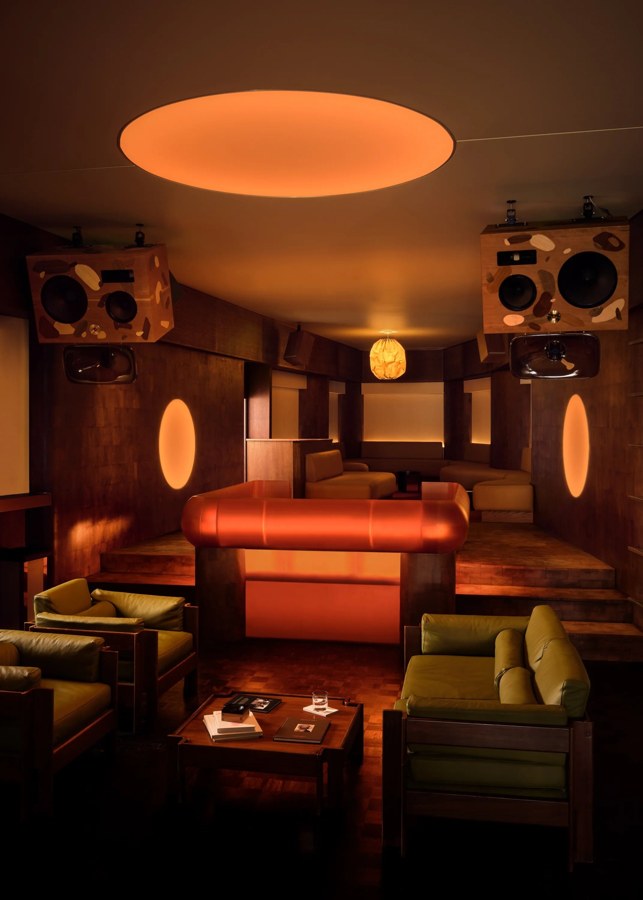
Hotel Lobbies and Lounge Spaces
These areas often benefit from systems that sound refined at lower levels and integrate discreetly into the architecture. The room needs calm, polish and consistency rather than spectacle.
Restaurants
Restaurants generally need even coverage, warmth and control, with enough flexibility to support different service periods. The system should support atmosphere while preserving comfort.
Bars and Members Clubs
These spaces often need more energy and more flexibility. Depending on the venue, the system may need to move from background music into a more assertive evening identity. Here, zoning and headroom become more important.
Late Night and Club Led Spaces
In these environments, output, control, low frequency performance and brand identity may all become more pronounced. Sometimes the loudspeaker is part of the visual language of the venue. Sometimes discretion is still important. The answer depends on the concept.
Compare specific products after defining the use
A lounge, restaurant, bar and performance space may have different briefs. Choose products using model-specific coverage, installation and operating requirements. A shared manufacturer name does not make every model equally suitable, and mixing brands is an option rather than a requirement.
One system. Several functions.
Illustrative venueAt concept design the venue is a plan: walls, openings and furniture. This is the point to design the audio, while ceilings, joinery and services can still move.
- Stage
- RIBA Stage 2
- Drawings
- Plan and furniture layout
The installed system: loudspeakers, integrated subwoofers and acoustic treatment, coordinated with the architecture. Every operating state that follows runs on this same equipment.
- Sources
- Playlist and DJ
- Routing
- Either source to any room
Music sets the character of the room without leading it. Even coverage and consistent level matter more than output.
- Source
- Scheduled playlist
- Preset
- Background
- Control
- Automatic
A private room separates for a dinner, launch or speech, then returns to service, without the team needing to touch the technical system.
- Source
- Playlist, private room independent
- Preset
- Event
- Control
- Private room panel
Where the brief calls for it, playback hands over to a DJ or live performer, with inputs, routing, monitoring and low-frequency support already designed in.
- Source
- DJ input, playlist off
- Preset
- Performance
- Control
- DJ or performer
Source
Active
Available, inactive
Speakers
Wall-mounted speaker
Integrated subwoofer
Bass trap
Coverage
Lower energyHigher energy
One system. Several functions.
Illustrative venueAt concept design the venue is a plan: walls, openings and furniture. This is the point to design the audio, while ceilings, joinery and services can still move.
- Stage
- RIBA Stage 2
- Drawings
- Plan and furniture layout
The installed system: loudspeakers, integrated subwoofers and acoustic treatment, coordinated with the architecture. Every operating state that follows runs on this same equipment.
- Sources
- Playlist and DJ
- Routing
- Either source to any room
Music sets the character of the room without leading it. Even coverage and consistent level matter more than output.
- Source
- Scheduled playlist
- Preset
- Background
- Control
- Automatic
A private room separates for a dinner, launch or speech, then returns to service, without the team needing to touch the technical system.
- Source
- Playlist, private room independent
- Preset
- Event
- Control
- Private room panel
Where the brief calls for it, playback hands over to a DJ or live performer, with inputs, routing, monitoring and low-frequency support already designed in.
- Source
- DJ input, playlist off
- Preset
- Performance
- Control
- DJ or performer
Source
Active
Available, inactive
Speakers
Wall-mounted speaker
Integrated subwoofer
Bass trap
Coverage
Lower energyHigher energy
Reliability Matters More Than Novelty
Hospitality systems need to perform daily and under pressure. A venue is not a domestic listening room. Systems run for long hours, staff change, conditions shift, and expectations remain high.
For that reason, professional grade amplification, DSP, control and loudspeaker design matter as much as headline sound quality. The best system is one that continues to perform consistently and predictably over time.
Specify the visual role as well as the listening role

Agree whether equipment should recede or become part of the composition. Inspect finishes, proportions, access and mounting with the design team. A sculptural form is not a substitute for technical data, just as an integrated grille is not a guarantee of suitable performance.
So What Makes a Hospitality Sound System Good?
A good hospitality system does five things well.
It supports the atmosphere of the venue. It fits the architecture. It performs reliably. It gives operators the right level of control. It remains appropriate as the venue evolves through the day and into the evening.
That is a more useful benchmark than any single brand hierarchy.


