
A nature-inspired interior raises three different questions: what it looks like, what sound content belongs there and how the room behaves acoustically. Keeping those decisions distinct gives the operator and designer a clearer brief.
A nature-inspired room can make planting, daylight, views and natural materials part of its visual identity. Those choices do not, by themselves, specify its acoustic performance. For the audio brief, separate three decisions: the character of the interior, the sound content that belongs there and the behaviour of the room.
An outdoor landscape and a furnished indoor room are different acoustic settings. Do not assume that forests universally absorb sound rapidly, or that an indoor plant scheme replaces a specified treatment. A material’s natural appearance does not establish absorption or diffusion. Ask for the relevant tested construction and installation where a finish is proposed to serve an acoustic role.
Alvarsson and colleagues examined recovery after an experimental stressor with exposure to natural sounds or environmental noise. The study found differences in a physiological recovery measure under those controlled conditions. It does not establish that a nature-themed restaurant reduces anxiety, that natural sound is always effortless, or that adding a water or birdsong soundtrack improves every venue.
Content is an operating decision. Discuss whether recorded music, natural sounds or another approach belongs in the venue’s intended identity. Consider how that choice works with conversation and service, then review it in the actual space. A chosen soundtrack cannot be used as evidence that the room’s acoustic issues have been resolved.
Room and system decisions need their own brief. Coordinate loudspeaker positions, visual presence, source control and any treatment with the interior. Use tested assembly information where performance is claimed, and involve the relevant acoustic specialist when formal room or building design is required.
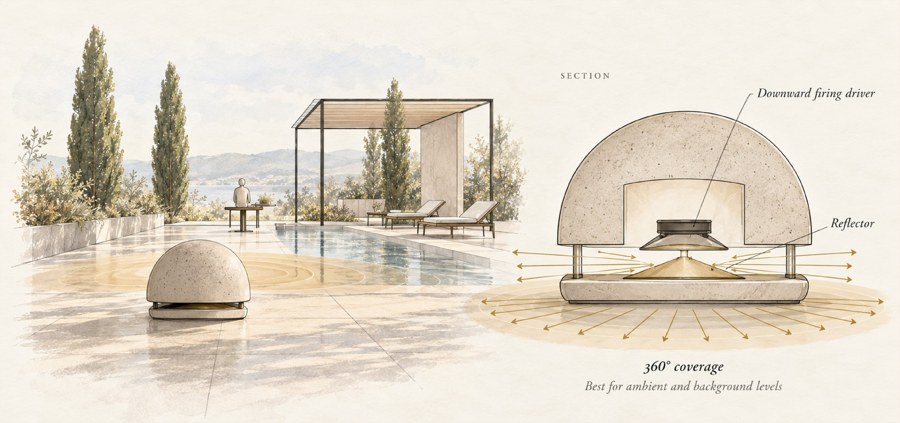
The book’s garden-facing residential photograph is an analogy for a nature-inspired setting, not a hospitality project result or proof of treatment. The outdoor speaker illustration explains an audio concept; its drawn sound paths are not a measured coverage model.
If CLI is relevant to the review, retain its stated observational scope. It does not measure a guest’s anxiety, stress or physiological recovery. A useful enquiry begins with the venue’s identity, the activities that must coexist and the specific sound issues the operator wants to investigate.
Source: FIS (2021), Ceilings and Acoustic Absorbers, hosted by Rockfon
Source: SDS, The Cognitive Load Index: Scope and status
Sources

Selected work
Claude's at Chotto Matte
Architectural audio consultancy. Custom loudspeaker integration. Interior design by Superfutures Design Studio.
As featured in Mondo-DR


