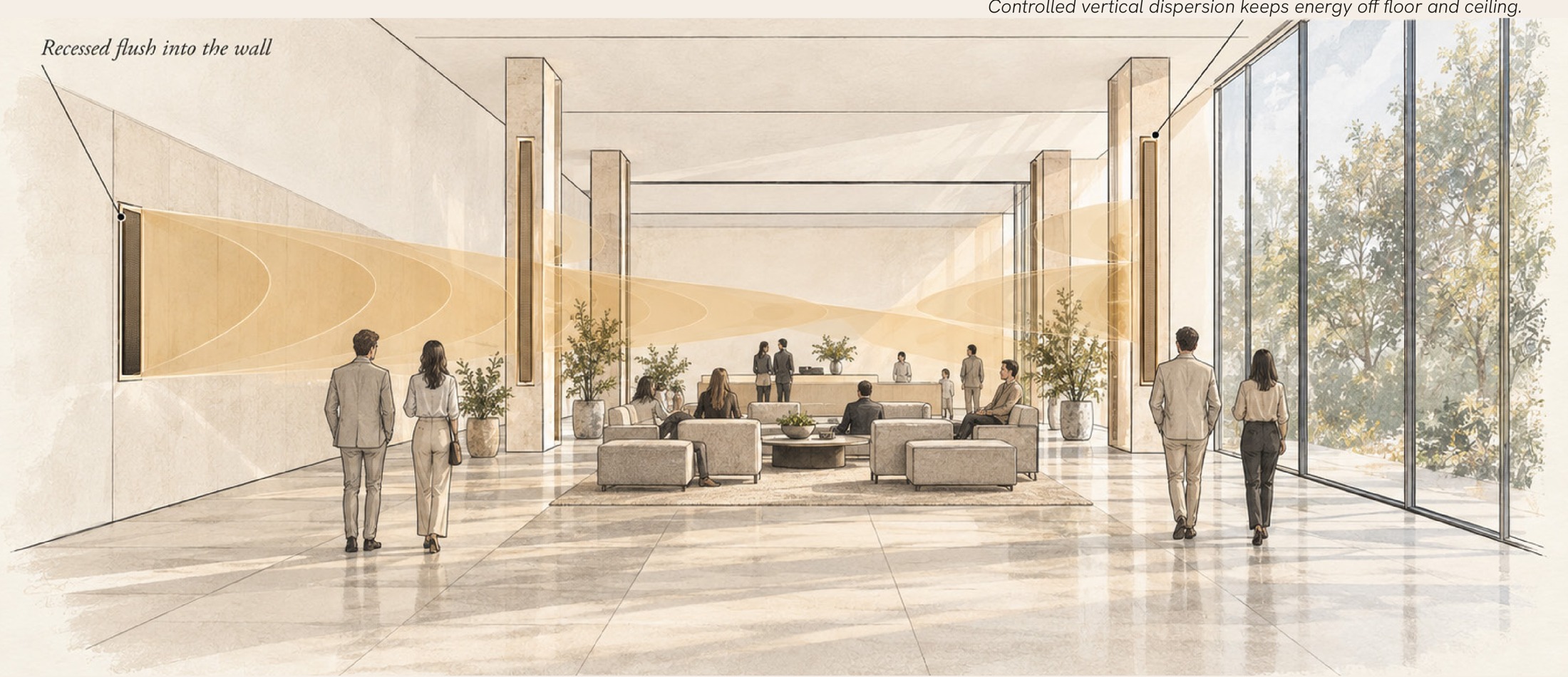
A hotel contains distinct listening and operating needs. Public spaces, food-and-beverage areas and guestrooms should be briefed separately, with system control kept distinct from building sound insulation and formal assessment.
Hotels Are Behavioural Journeys
A hotel is not one environment. It is a sequence of environments. The guest arrives from the outside world carrying external energy: travel fatigue, work stress, social anticipation, time pressure. The hotel must regulate that state.
That begins immediately. Lighting helps. Scent helps. Spatial choreography helps. Sound is one of the most immediate regulatory tools. Before a guest fully processes the architecture, they are already processing the acoustic environment. That first impression matters, because hospitality memory starts at arrival.
The Lobby Is Acoustic Orientation
The lobby is often misunderstood acoustically. Many treat it as a passive waiting area. It is not. It is an orientation space. The acoustic environment here sets the emotional tone for the entire property. Too quiet and the space can feel cold. Too aggressive and it can feel stressful. Too inconsistent and it feels unresolved.
The lobby requires sonic balance: warmth, presence and spatial ease. This is not simply about music. It is about acoustic density. How the room carries sound. How speech survives. How movement feels. Good lobby sound creates emotional landing. That matters more than volume.
Hotels Operate Across Multiple Acoustic Identities
A hotel contains multiple hospitality typologies: lobby, bar, restaurant, corridor, private lounge, spa, gym and guest room. Each has a different acoustic role. The mistake is applying one sonic logic across all of them. That creates behavioural conflict.
A bar needs energy. A lounge needs softness. A spa needs decompression. A corridor needs continuity without intrusion. A guest room needs privacy and control. Each requires its own acoustic strategy, not just its own playlist.
Sound Shapes Perceived Luxury
Luxury in hospitality is rarely about excess. It is about effortlessness, ease, control, calm and precision. Acoustic environments strongly influence this. A visually refined hotel with poor sound management feels less premium, even if guests cannot articulate why.
Excessive reverberation, harsh speech reflections, poor music coverage and uncontrolled spill all reduce perceived refinement. Sound affects how expensive a space feels. Not visually. Sensorially. And in hospitality, sensory perception shapes commercial perception.
Separate bedroom requirements from public-area audio
Public-area playback, a restaurant system and sound insulation around guestrooms are different briefs. Do not assume that zoning or guestroom music controls address transmission, mechanical noise or privacy. Coordinate the relevant specialist assessment and building responsibilities alongside any audio system work.
Source: FIS (2021), Ceilings and Acoustic Absorbers, hosted by Rockfon
Source: GOV.UK, Approved Document E
One system. Several functions.
Illustrative venueAt concept design the venue is a plan: walls, openings and furniture. This is the point to design the audio, while ceilings, joinery and services can still move.
- Stage
- RIBA Stage 2
- Drawings
- Plan and furniture layout
The installed system: loudspeakers, integrated subwoofers and acoustic treatment, coordinated with the architecture. Every operating state that follows runs on this same equipment.
- Sources
- Playlist and DJ
- Routing
- Either source to any room
Music sets the character of the room without leading it. Even coverage and consistent level matter more than output.
- Source
- Scheduled playlist
- Preset
- Background
- Control
- Automatic
A private room separates for a dinner, launch or speech, then returns to service, without the team needing to touch the technical system.
- Source
- Playlist, private room independent
- Preset
- Event
- Control
- Private room panel
Where the brief calls for it, playback hands over to a DJ or live performer, with inputs, routing, monitoring and low-frequency support already designed in.
- Source
- DJ input, playlist off
- Preset
- Performance
- Control
- DJ or performer
Source
Active
Available, inactive
Speakers
Wall-mounted speaker
Integrated subwoofer
Bass trap
Coverage
Lower energyHigher energy
Restaurants and Bars Within Hotels Need Independent Strategy
One common mistake in hotel projects is treating restaurant and bar acoustics as secondary. They are not. These are revenue environments, and how they sound is part of how guests experience them. Comfortable, well-judged acoustics support conversation and atmosphere; a restaurant or bar that is tiring to sit in works against the wider brand, while one that feels effortless reinforces it.
This means hotel F&B acoustics should be treated with the same strategic care as standalone hospitality venues. Not absorbed into the wider building audio package. The same rigour we apply through restaurant sound system design should govern any hotel-led food and beverage environment.
Cognitive Load in Hotels

Selected work
Drunch
Audio system design. Pequod Acoustics loudspeaker system. Interior design by Valerie von Bechtolsheim.
Hotels should reduce effort. That is one of their primary functions, especially at premium level. If the acoustic environment creates excess listening effort, Cognitive Load Index rises. This affects arrival comfort, conversation ease, social fatigue, rest quality and decision fatigue.
Guests may not identify the cause. But they feel the effect. Good hotel acoustics lower processing demand. That improves emotional regulation. Better emotional regulation improves guest satisfaction. And guest satisfaction drives loyalty.
Develop a brief for each use of the hotel
Describe the needs of arrival, lounge, dining, bar and any event or outdoor areas. Decide which require shared or independent sources and controls. Use the existing venue-plan example only to explain a hotel’s food-and-beverage spaces, not as a model of bedrooms or the whole building. There is no verified general hotel project in the supplied books, so do not label a nightclub photograph or the concept drawing as one.
Speaker Placement Should Follow Architecture
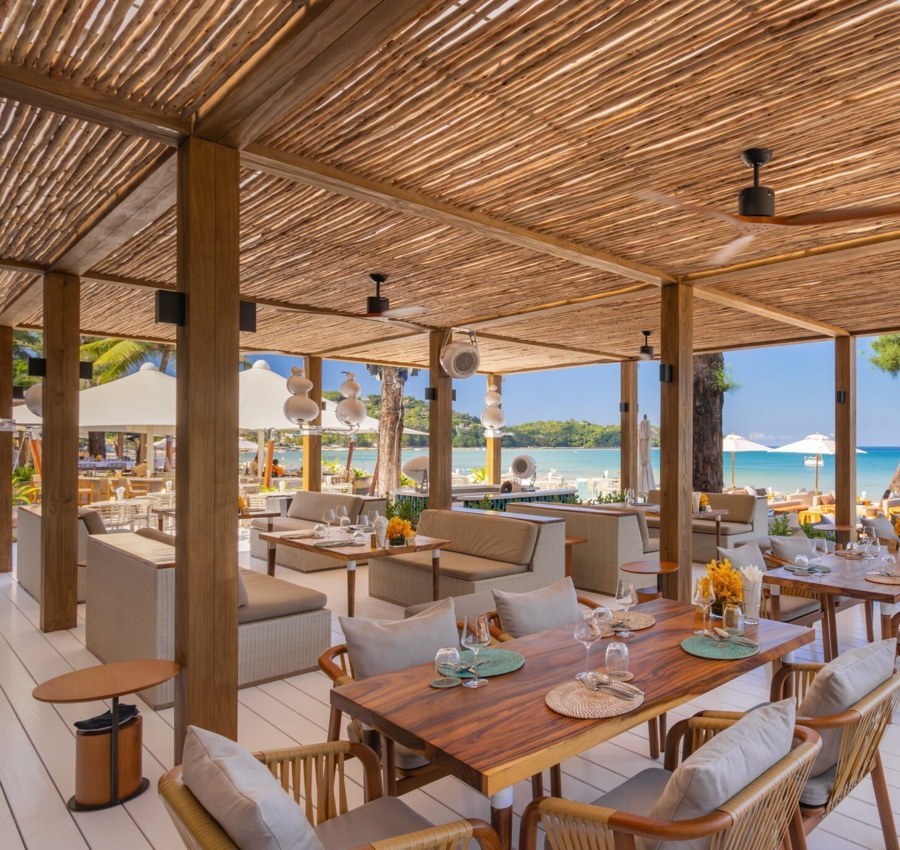
Hotel audio often fails because placement is reactive. Speakers added after ceiling design. Coverage fitted around lighting. Infrastructure squeezed into available voids. This creates inconsistency.
Hotel sound systems should be coordinated with architects, interior designers, lighting teams and M&E engineers. Speaker placement is spatial choreography. It shapes how sound moves through architecture. That makes it a design decision. Not a technical afterthought. This is the principle that defines our work as an architectural audio consultancy, and it is the same approach that has shaped projects like Porto Arts Club. Our wider thinking on this is set out in The Energy Band.
Hotel Sound Is Brand Infrastructure
Branding in hospitality is often understood visually: colour palette, furniture language, signage, materiality. But sound is brand infrastructure too. It influences how guests remember the property, how long they linger, how easily they settle, how deeply they recover and how likely they are to return.
Hotels that understand this treat sound as part of the guest journey, not as background. Because in hospitality, background is never neutral. It is always shaping behaviour. And in hotels, behaviour is the business.


