
Sound contributes to how a space is experienced through use. SDS develops the audio brief with the operator and architect so that music, conversation and the visual role of equipment support the intended character of the room.
The Invisible Architecture of Sound
Every space has an acoustic character. The dimensions of a room, the surfaces that define it, and the activities it hosts all contribute to how sound behaves within it. This acoustic environment exists whether we design it intentionally or not.
The question is not whether sound will shape the experience of a space, but whether that shaping will be deliberate or accidental.
In architectural terms, sound functions as invisible architecture. It defines boundaries, creates zones, and influences movement patterns. A conversation pit in a hotel lobby works not only because of its physical arrangement, but because its acoustic treatment allows intimate dialogue within a larger public space.
Begin with the intended use
State what the room needs to support: conversation, focused listening, a presentation, an exhibition or a change in programme. Translate that into system and operating decisions with the project team. Do not cite environmental psychology as a single proof of spaciousness, dwell time, wellbeing and commercial performance without the relevant studies.
Integration at Concept Stage
The most successful projects integrate sound design from concept stage. This allows:
- Ceiling and wall systems to incorporate acoustic strategy
- Speaker placement to align with architectural intention
- Material selections to serve both visual and acoustic purposes
- Zoning strategies to consider sonic as well as spatial logic
When audio consultancy begins during technical design or later, options become constrained. Retrofit solutions often compromise both acoustic performance and visual integrity.
Define content, delivery and user control
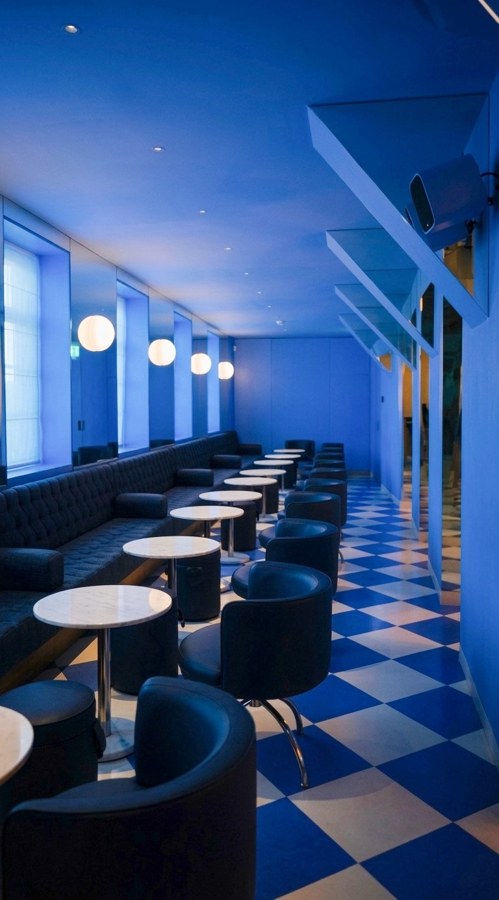
Agree what the playback is for, where it should be heard and how it is controlled. Coordinate speaker placement and the visual role of equipment with the room. Background music is not a substitute for a designed sound-insulation or speech-privacy solution. Deliberately visible speakers can be a valid part of the composition.
Hospitality Applications

Selected work
Bisushima
Architectural audio consultancy. Pequod Acoustics custom specification. Architecture by Ben Adams Architects.
As featured in Architecture Magazine
In hospitality environments, sound design touches several aspects of how a venue is experienced:
- Guest comfort and satisfaction
- Average dwell time
- Perception of service quality
- Staff communication and efficiency
A hotel lobby should feel calm yet welcoming. A restaurant should support conversation while maintaining energy. A spa should feel separated from the world outside.
Each of these conditions requires specific acoustic treatment and audio system design. Generic solutions fail to serve the distinct character of each environment.
The Design Led Approach
At Sonic Design Studios, we approach audio as a design discipline rather than a technical service. This means:
- Understanding the design narrative before specifying equipment
- Collaborating with architects and interior designers as peers
- Considering sound as part of spatial composition
- Specifying systems that serve long term performance
The goal is not to impose sound onto a space, but to reveal the sonic potential already present in the architectural intent.
Conclusion
Sound is not decoration. It is infrastructure that supports how spaces function, feel, and endure over time.
When approached with the same rigour and sensitivity applied to other design elements, sound becomes a powerful tool for shaping experience. When overlooked, it becomes an obstacle.
For architects, interior designers, and their clients, the choice is clear. Sound will shape the experience of every space they create. The only question is whether that shaping will be intentional.


