A useful remedy starts with a diagnosis during the way the venue is actually used. Identify the dominant noise sources and locations, then decide which changes belong to operations, the audio system, room treatment or building isolation.
Define the problem under representative use
Record the affected places, timing, occupancy, active sources and settings. Distinguish playback, room behaviour, operational equipment and sound transmission before specifying an intervention. A diagnosis should establish what the review covers and which specialist responsibilities it requires.
Source: Siebein and Siebein (2023), Restaurant Acoustics: A soundscape exploration and case studies
One system. Several functions.
Illustrative venueAt concept design the venue is a plan: walls, openings and furniture. This is the point to design the audio, while ceilings, joinery and services can still move.
- Stage
- RIBA Stage 2
- Drawings
- Plan and furniture layout
The installed system: loudspeakers, integrated subwoofers and acoustic treatment, coordinated with the architecture. Every operating state that follows runs on this same equipment.
- Sources
- Playlist and DJ
- Routing
- Either source to any room
Music sets the character of the room without leading it. Even coverage and consistent level matter more than output.
- Source
- Scheduled playlist
- Preset
- Background
- Control
- Automatic
A private room separates for a dinner, launch or speech, then returns to service, without the team needing to touch the technical system.
- Source
- Playlist, private room independent
- Preset
- Event
- Control
- Private room panel
Where the brief calls for it, playback hands over to a DJ or live performer, with inputs, routing, monitoring and low-frequency support already designed in.
- Source
- DJ input, playlist off
- Preset
- Performance
- Control
- DJ or performer
Source
Active
Available, inactive
Speakers
Wall-mounted speaker
Integrated subwoofer
Bass trap
Coverage
Lower energyHigher energy
Understand What the Room Is Doing
Bars and restaurants often contain many of the same acoustic risk factors. Hard floors, bare walls, glazing, exposed soffits, tight table arrangements and minimal soft furnishing can all contribute to a room that becomes harsh under load.
As occupancy builds, guests start raising their voices. This increases the overall noise floor and creates the familiar spiral where the room feels progressively less comfortable as service goes on.
In these conditions, fixing acoustics is not about making the venue quiet. It is about making it more controlled.
Improve the Room, Not Just the Music
One of the most common mistakes is trying to solve the issue only through the music system. Lowering the level may help temporarily, but it does not address the acoustic behaviour of the room itself.
If reverberation is excessive, the space usually needs some form of acoustic control so reflected sound energy is reduced. The exact approach depends on the design and the practical constraints of the venue, but the aim is always the same. The room should become calmer, clearer and easier to occupy.
Consider the Sound System Layout
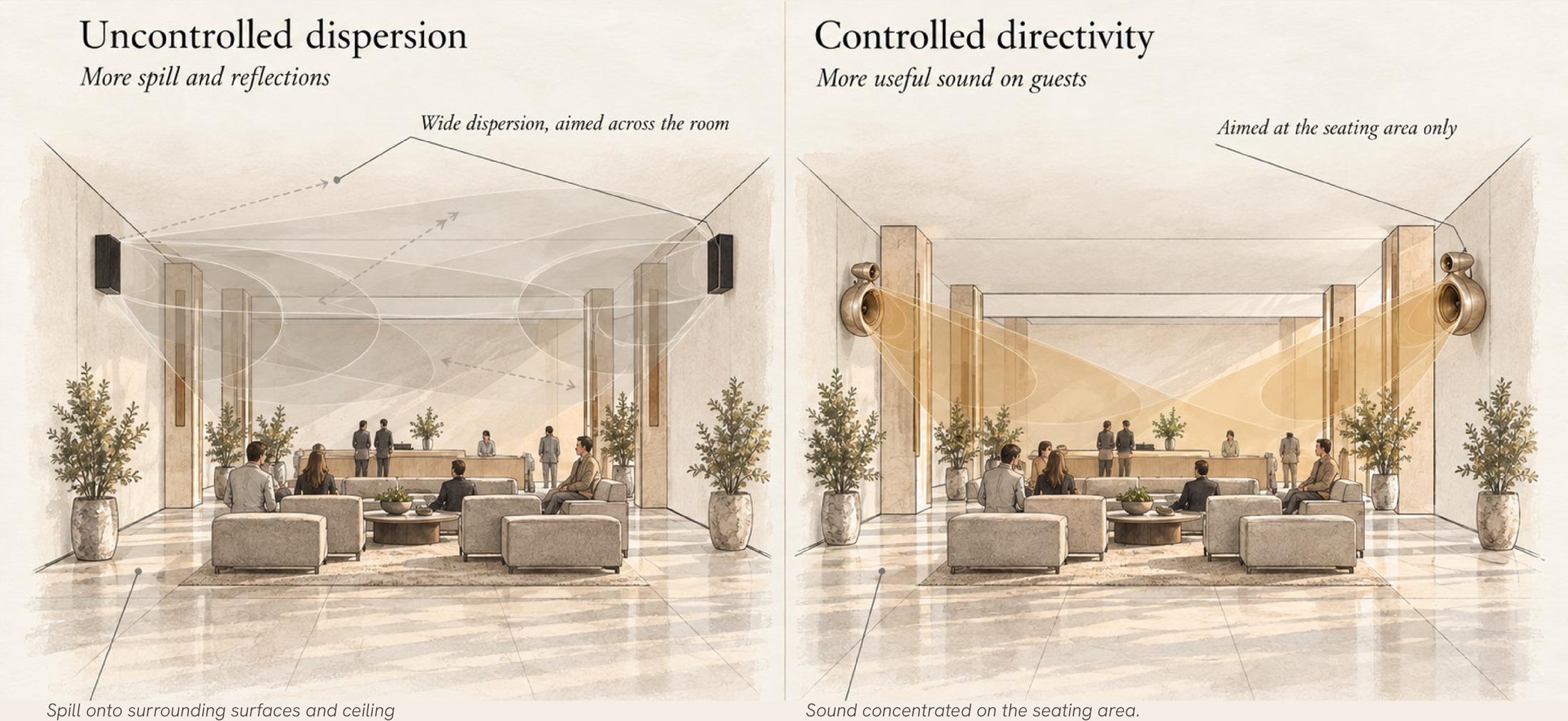
Sound system design still matters. A venue with poor loudspeaker coverage often ends up with some areas too loud and others under served. This encourages higher playback levels overall and adds more energy into an already difficult room.
A better layout, often using more controlled distribution at lower levels, can materially improve comfort. In many hospitality environments, this works alongside acoustic improvements rather than replacing them.
Use Solutions That Suit the Venue

Selected work
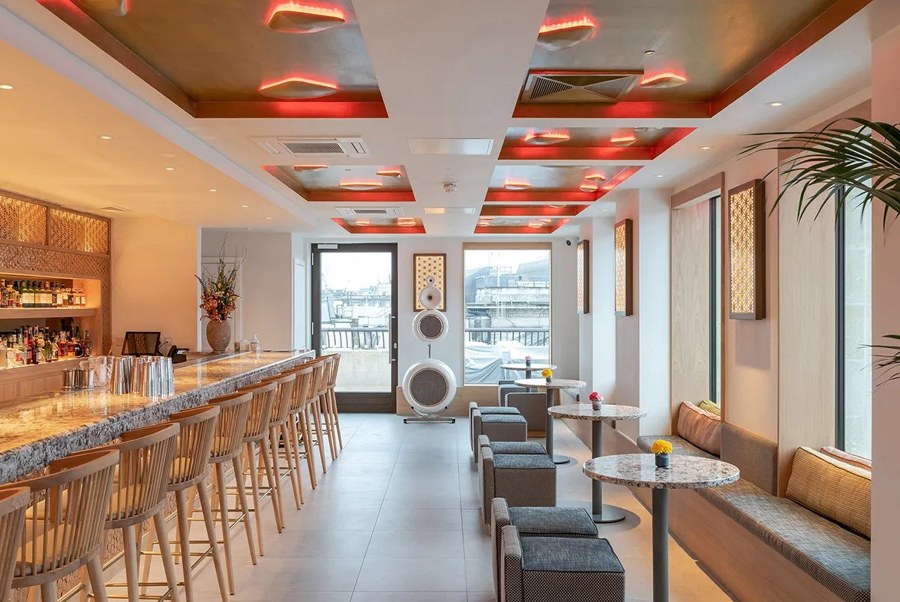
Drunch
Audio system design. Pequod Acoustics loudspeaker system. Interior design by Valerie von Bechtolsheim.
Bars and restaurants do not need crude or visually disruptive treatment to improve their acoustic performance. In design led venues, the acoustic response should be chosen with the same care as the rest of the interior.
The objective is not to impose a technical aesthetic. It is to improve comfort while keeping the visual character of the venue intact.
Think About Operation, Not Just Appearance
Any solution needs to work in live service. Acoustic improvement should support the way the venue actually functions, including how staff move, how tables are arranged, how different zones behave and how music is used through the day and evening.
This is why hospitality acoustic work is rarely just about materials. It is about the relationship between room behaviour, system design and operational reality.
Assess the options within the existing venue
Review existing equipment, infrastructure, processing and controls alongside the room. Some briefs can be addressed with system work; others require construction or specialist acoustic assessment. Set out the feasible options, disruption and limits before promising an outcome.