
SDS treats sound as a material consideration in a space: something to discuss alongside layout, light and finishes. This is a design position that helps operators and architects make the audio brief part of the overall scheme.
A design position, not an industry-wide trend
Calling sound a fifth material is SDS’s way of giving it a place in the brief. It encourages discussion of use, surfaces, layout, music delivery and the visual role of equipment alongside the rest of the scheme. It is not a claim that all leading architects use the same framework or that historic buildings shared one acoustic intention.
Why sound changes behaviour in hospitality spaces
In the hospitality sector, the acoustic character of a room is part of the experience, not a detail added at the end. People are sensitive to the sound around them: in an acoustically chaotic restaurant or hotel lobby, occupants instinctively raise their voices, and the room climbs into a cycle of noise that feeds on itself. A managed acoustic environment does the opposite. It allows private conversation within a public setting and lets guests relax into their surroundings. Sound shapes the emotional tone of a space, which is reason enough to treat it as a primary material rather than a finishing touch.
How architects can integrate audio earlier in design
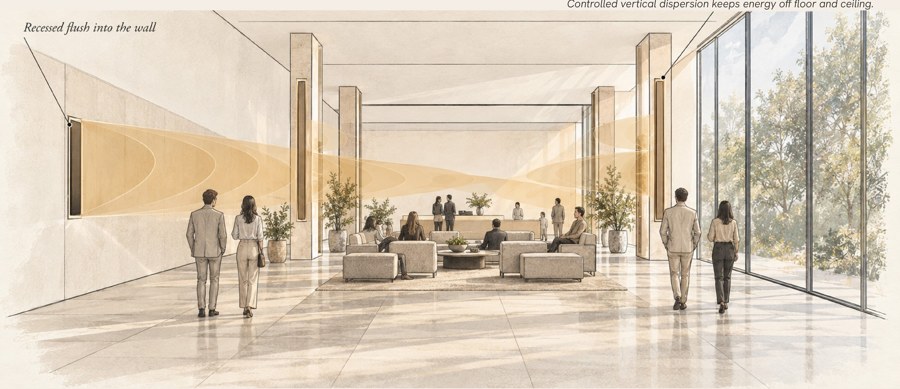
The traditional workflow introduces acoustics and audio near the end of the process, which limits the options to surface-level corrections. Genuine spatial coherence comes from bringing audio strategy into the initial planning phase. Engaging an architectural audio consultancy in London early means the geometry of a space can be optimised for sound, loudspeaker positions can align with architectural sightlines, and treatment can be embedded within the materiality rather than applied over it. The approach protects the aesthetic vision while resolving how the room will actually perform.
A design assessment alongside conventional measurement

Selected work
Bisushima
Architectural audio consultancy. Pequod Acoustics custom specification. Architecture by Ben Adams Architects.
As featured in Architecture Magazine
SDS uses CLI where a structured review of listening conditions adds useful information. Its scores reflect professional judgement informed by research, rather than measured subconscious mental effort. It does not make individual behaviour or commercial performance predictable.
Source: SDS, The Cognitive Load Index: Scope and status
Why sound designed as architecture creates stronger spaces
Treating sound as the fifth material raises the quality of the built environment because it closes the gap between how a space looks and how it feels. When audio and acoustic management are part of the architecture rather than bolted onto it, the result is coherence: rooms that are adaptable, intuitive and comfortable to occupy. The architecture no longer simply houses an experience; it supports one. That is the case for sensory architecture, and for designing sound in from the first drawing.


