
An audio consultant is useful when the venue needs a clear brief, coordinated system design and a practical plan for installation and use. The value depends on the project's complexity and the decisions the operator and design team need to make.
What Most Restaurants Do
The typical approach to restaurant audio follows a predictable pattern. Sound is treated as a technical afterthought rather than a design consideration.
An installer is brought in late in the project, often after ceilings are fixed and the interior design is complete. The brief is simple: provide background music and maybe some announcement capability. Speakers are selected based on budget and availability. Positions are determined by what is convenient rather than what is optimal.
Acoustics are rarely addressed. The assumption is that the speakers will handle everything. If the room sounds bad, the instinct is to adjust volume or EQ rather than question the underlying acoustic environment.
The result is a venue that looks carefully considered but sounds generic at best, and uncomfortable at worst. Guests cannot quite articulate why the space feels tiring or why conversations are difficult, but they feel it.
What an Audio Consultant Actually Does
An audio consultant takes a fundamentally different approach. Sound is treated as a design layer, resolved alongside architecture, interiors, lighting and ventilation.
The scope of work typically includes:
Acoustic Planning
Analysing how sound will behave in the space based on geometry, materials and layout. Identifying potential problems before construction begins. Specifying acoustic treatment that integrates with the interior design.
System Design
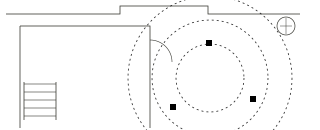
Specifying speakers, amplifiers and processing based on the actual requirements of the venue. Determining optimal placement for even coverage and appropriate volume. Designing zones so different areas can be controlled independently.
Integration
Coordinating with architects, interior designers and contractors to ensure audio requirements are met without compromising the design. Positioning speakers to be discreet or invisible. Routing infrastructure cleanly.
Commissioning
Overseeing installation and tuning the system on-site to achieve the intended result. Ensuring the venue sounds as intended rather than just technically functional.
The consultant works as part of the design team rather than as a supplier arriving at the end. This is what distinguishes the approach from standard installation.
Agree the responsibilities and deliverables
The distinction is the contracted work, not a hierarchy between job titles. A project may need brief development, system design, equipment supply, installation, commissioning or several of these. Agree who is responsible for each deliverable and how the work coordinates with the operator, architect, interior designer and integrator.
When consultancy adds useful project work
Design input is useful when decisions about coverage, equipment, construction and operation need coordination. It is not necessary to claim that every successful venue appoints a consultant or that a particular fee guarantees payback. Describe the scope, the decisions it resolves and the information needed to begin.
Design Integration
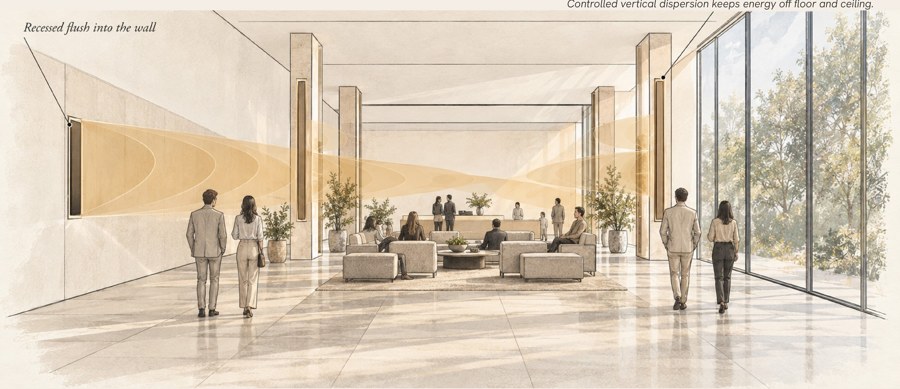
Consultants work with architects and designers to resolve how the loudspeakers sit in the interior, whether that means concealing them within ceilings, walls and joinery, or choosing equipment that is meant to be seen. Either way the aim is a considered result rather than equipment squeezed into whatever space is left.
Atmosphere Control
A properly designed system allows operators to shape atmosphere throughout service. Morning calm. Lunchtime energy. Evening intimacy. Different zones for bar and dining areas. This level of control requires planning from the outset.
Consistency
Well-designed systems deliver consistent audio quality regardless of where guests are seated. No hot spots. No dead zones. No areas where conversation is difficult or music is oppressive. This consistency is difficult to achieve retrospectively.
Premium Experience
Sound affects perception. A venue that sounds comfortable and well-considered reinforces the quality of everything else. A venue that sounds harsh, loud or uneven undermines it. For restaurants where experience justifies premium pricing, audio quality is not optional.
When You Should Bring One In

The consistent message from successful projects is simple: engage a consultant at concept stage.
This is when decisions are still flexible. Ceiling plans can accommodate optimal speaker positions. Material selections can balance visual design with acoustic performance. Infrastructure routes can be coordinated cleanly. Budget can be allocated appropriately.
Bringing a consultant in later means working with constraints. Positions become compromises. Treatment becomes a visible addition. Costs increase as retrofit replaces integration.
The earlier a consultant is involved, the better the result and typically the lower the overall cost. Prevention is more efficient than correction.
What Happens If You Do Not
Venues that skip consultancy often encounter predictable problems. Understanding why restaurants sound bad helps illustrate the consequences of inadequate planning.
Costly Fixes
Acoustic issues discovered after opening are expensive to resolve. Retrofitting treatment means disrupting operations. Repositioning speakers means opening ceilings. What could have been handled during construction becomes a significant project.
Poor Atmosphere
Spaces with unresolved acoustics are harder to enjoy: conversation takes effort and staff can find the environment tiring, so the venue may never quite achieve the atmosphere the design intended.
Compromised Design
Late-stage audio additions often clash with interiors. Visible speakers where they should be hidden. Cables running through carefully designed spaces. Equipment that was never intended to be seen becoming a permanent feature.
These outcomes are avoidable. The question is whether sound is treated as a priority or an afterthought.
The Right Approach
At Sonic Design Studios, we provide restaurant sound system design in London for hospitality venues that take atmosphere seriously. We work with architects, interior designers and operators from concept stage to ensure audio is resolved properly.
If you are planning a restaurant, bar or hospitality venue, defining the sonic layer early will protect atmosphere, comfort and brand perception from day one. Resolving it early tends to avoid costly late changes and gives the design the best chance of performing as intended.

