26 March 2026Restaurant Acoustics7 min read

Why Do Restaurants Sound Bad? (And How to Fix It)

Tariq Ibrahim·Director, Sonic Design Studios

Understanding why so many restaurants have poor acoustics and what can be done to create comfortable, well-designed sound environments for guests and staff.


If you have ever struggled to hear the person across the table, left a restaurant with ringing ears, or noticed a space that somehow felt exhausting despite beautiful interiors, you have experienced the consequences of poor restaurant acoustics. This is not a niche complaint. It is one of the most common issues affecting hospitality venues today, and one of the most overlooked.

The reality is that most restaurants sound bad because sound is not treated as a design priority. It is addressed too late, delegated to installers rather than consultants, or simply not considered at all. The result is venues where guests feel uncomfortable, conversations become strained, and the atmosphere never quite delivers.

Understanding why this happens is the first step towards fixing it.

Why Restaurants Often Sound Bad

Several factors contribute to poor restaurant acoustics, and they usually compound each other.

Too Many Hard Surfaces

Modern restaurant design often favours visually striking materials. Polished concrete, exposed brick, marble, glass, and steel create dramatic spaces but are terrible for sound. Hard surfaces reflect sound waves rather than absorbing them. When a room is full of these materials, sound energy bounces around and builds up, creating a wall of noise that makes conversation difficult.

No Acoustic Treatment

Unlike lighting or ventilation, acoustic treatment is frequently omitted from restaurant fit-outs. Without absorptive materials strategically placed to manage reflections, even a modestly occupied room can become uncomfortably loud. The problem compounds as more guests arrive and the overall noise floor rises.

Poor Speaker Placement

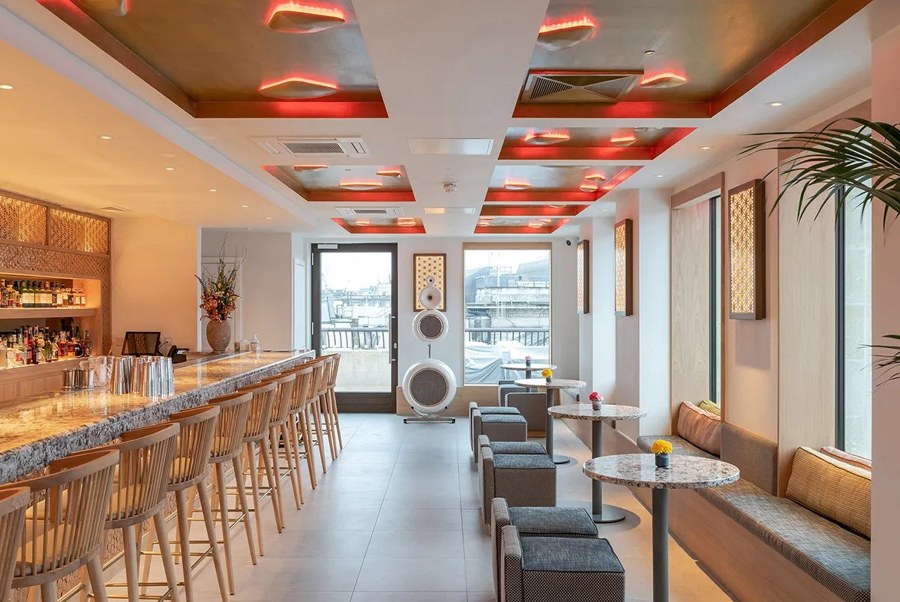
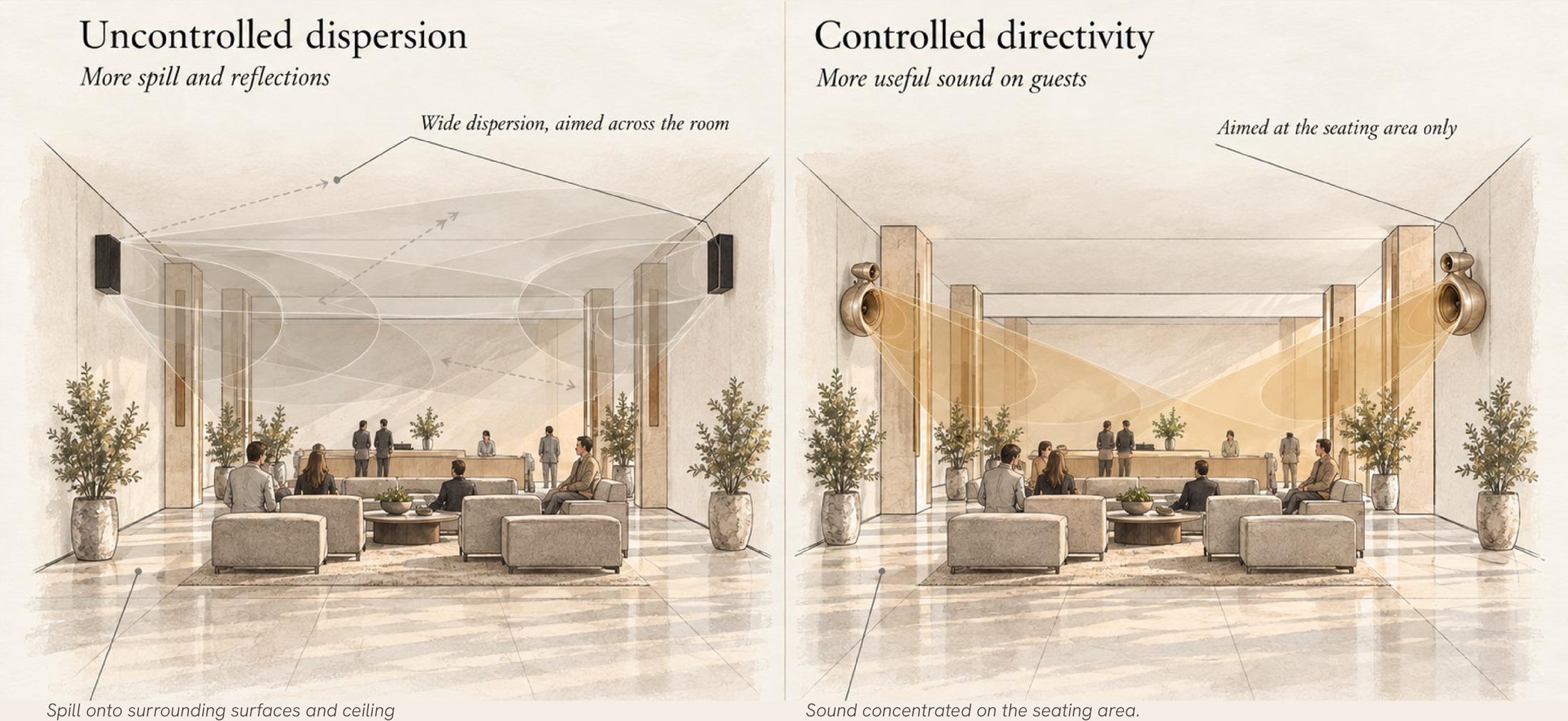
When audio is addressed late in a project, speaker positions are often dictated by convenience rather than coverage. Speakers end up clustered above the bar, mounted in corners, or squeezed into ceiling tiles with no consideration for how sound will distribute across the room. The result is uneven volume, with some areas too loud and others barely covered.

Open-Plan Layouts

Contemporary hospitality design often embraces open kitchens, bar areas flowing into dining rooms, and large undivided spaces. While visually appealing, these layouts create acoustic challenges. Sound travels freely across the entire venue, making it difficult to create distinct atmospheres in different zones.

No Zoning Strategy

Related to layout is the absence of zoning. A bar area and a dining room have different sonic needs. Without a system designed to treat these areas independently, operators are forced to choose a single volume level that inevitably compromises both. The bar feels too quiet, or the dining room feels too loud.

Sound Considered Too Late

Perhaps the most fundamental problem is timing. Audio is frequently left until after ceilings are fixed, lighting is resolved, and infrastructure is complete. By this stage, speaker positions are constrained, cable routes are limited, and there is no budget left for proper acoustic treatment. The system is bolted on rather than integrated.


The Impact of Poor Sound

Bad restaurant acoustics are not just an annoyance. They have tangible consequences for guest experience and business performance.

Uncomfortable Atmosphere

When a room is too loud or too reverberant, guests become fatigued. Conversations require effort. The space feels stressful rather than relaxing. This affects how people perceive the venue regardless of how good the food or service might be.

Guests Leaving Sooner

Research consistently shows that noise is one of the top complaints diners make about restaurants. Uncomfortable acoustics directly affect dwell time. Guests leave earlier, spend less, and are less likely to return.

Staff Fatigue

The impact on staff is often overlooked. Working in a noisy environment for an entire shift is exhausting. Communication becomes difficult. Mistakes increase. Over time, this affects recruitment, retention, and overall service quality.

Brand Damage

For premium venues, poor sound undermines brand positioning. A restaurant that looks sophisticated but sounds chaotic creates a disconnect that guests notice, even if they cannot articulate exactly what is wrong.


The Difference Between Sound Systems and Acoustics

One common source of confusion is the distinction between sound systems and acoustics. We explore this topic in depth in our article on restaurant acoustics vs sound system design.

A sound system refers to the equipment: speakers, amplifiers, processing, and control. It is what delivers music or announcements into the space. A good sound system provides even coverage, clarity, and appropriate power for the venue.

Acoustics refers to how sound behaves in the room itself. It is determined by the architecture, materials, and geometry of the space. Good acoustics mean sound energy is controlled, reflections are managed, and the room remains comfortable as occupancy rises.

The two are related but distinct. You can have an excellent sound system in a room with terrible acoustics, and it will still sound bad. The speakers might be perfectly positioned, but if the room reflects too much energy, the result will be muddy, loud, and fatiguing.

Conversely, a room with good acoustics can make even a modest sound system perform well. When the space is controlled, sound remains clear and comfortable.

Addressing both is essential for a successful result.


How to Fix Restaurant Sound

Improving restaurant acoustics requires a combination of planning, materials, and expertise.

Acoustic Planning

The first step is understanding how sound will behave in the space. This means analysing the room geometry, identifying reflective surfaces, and determining where absorption or diffusion is needed. For new builds, this analysis should happen at concept stage. For existing venues, an acoustic survey can identify the key issues.

Material Choices

Introducing absorptive materials does not mean compromising aesthetics. Acoustic panels can be integrated into ceiling systems, wall treatments, and even furniture. Soft furnishings, curtains, and upholstered banquettes all contribute to absorption. The key is balancing visual design with acoustic performance.

Zoning

For larger venues, zoning is essential. This means designing audio systems that allow different areas to be controlled independently. The bar can have higher energy while the dining room remains calm. Private spaces can be isolated entirely. This requires planning speaker positions and system architecture from the outset.

Speaker Placement

Speakers should be positioned based on coverage requirements, not convenience. This means understanding sightlines, seating layouts, and how sound will propagate through the space. Distributed systems with multiple smaller speakers typically perform better than fewer large units mounted in corners.

Working With an Audio Consultant

Perhaps the most important step is engaging specialist expertise early. An audio consultant brings together acoustic analysis, system design, and project coordination. They work alongside architects and interior designers to ensure sound is resolved as part of the design, not added as an afterthought. To understand more about this role, see our guide on whether you need an audio consultant for a restaurant.

For restaurant projects, this typically means involvement from concept stage through to final commissioning. The consultant defines the acoustic strategy, specifies appropriate equipment, coordinates with contractors, and tunes the system on-site to achieve the intended result.


When Sound Should Be Considered

The consistent message from successful projects is simple: sound should be considered at concept stage.

This is when ceiling plans are still flexible. When speaker positions can be coordinated with lighting and ventilation. When infrastructure routes can be planned. When acoustic treatment can be integrated into the material palette.

Leaving sound until later means working with constraints. Speaker positions become compromises. Acoustic treatment becomes an expensive addition. Systems become visible when they should be invisible.

Early involvement costs little but protects against significant problems later. It is the difference between a venue that sounds as good as it looks and one that undermines its own potential.


The Solution

At Sonic Design Studios, we provide restaurant sound system design in London for design-led hospitality venues. We work with architects, interior designers, and operators to ensure sound is resolved properly from the outset.

Our approach combines acoustic consultancy, system specification, and project coordination. We bring audio into the design conversation early, before compromises are forced, and we stay involved through commissioning to ensure the result matches the intent.

If you are planning a restaurant, bar, or hospitality venue in London, defining the sonic layer at concept stage will protect atmosphere, comfort, and brand perception from day one.

Facing similar challenges?

Let us discuss how we can help resolve the sonic layer of your project.

Start a conversation
The Architect's Guide to Specifying Audio Systems — Sonic Design Studios
Manifesto

Preserve the
Design Intent.

Schematic design is the only true window
for seamless audio integration.
This is our architectural manifesto.

A practical reference for architects and interior designers
on how to specify high-performance audio systems
within the design programme.