
A quieter-feeling restaurant does not have to look like a recording studio. The design task is to identify where treatment would help and coordinate suitable construction with ceilings, joinery and furnishings already in the scheme.
Review ceilings alongside the rest of the room
Ceilings can offer treatment opportunities, but they are not automatically the most effective surface in every venue. Compare the room geometry, existing finishes, services, access and the complete proposed construction. A treatment recommendation should respond to the diagnosed problem and its tested installation requirements.
Source: FIS (2021), Ceilings and Acoustic Absorbers, hosted by Rockfon
Specify furnishings and build-ups, not just a look
Do not assume that a fabric, a textured facing or a decorative slat supplies a known absorption performance. Ask for data for the relevant construction and installation. Furnishings can be part of the design review, but their appearance is not a substitute for tested performance. Existing venues may have useful options; coordinate them with operations and maintenance.
Source: FIS (2021), Ceilings and Acoustic Absorbers, hosted by Rockfon
Use the layout and the zoning
Where you place the bar, the hard surfaces and the quieter tables changes how sound moves through the room. Separating the lively zone from the calm one, and treating each accordingly, often does more than any single product. A room that is zoned well rarely needs to be rescued later.
Make absorption a feature, not an apology

Selected work
Bisushima
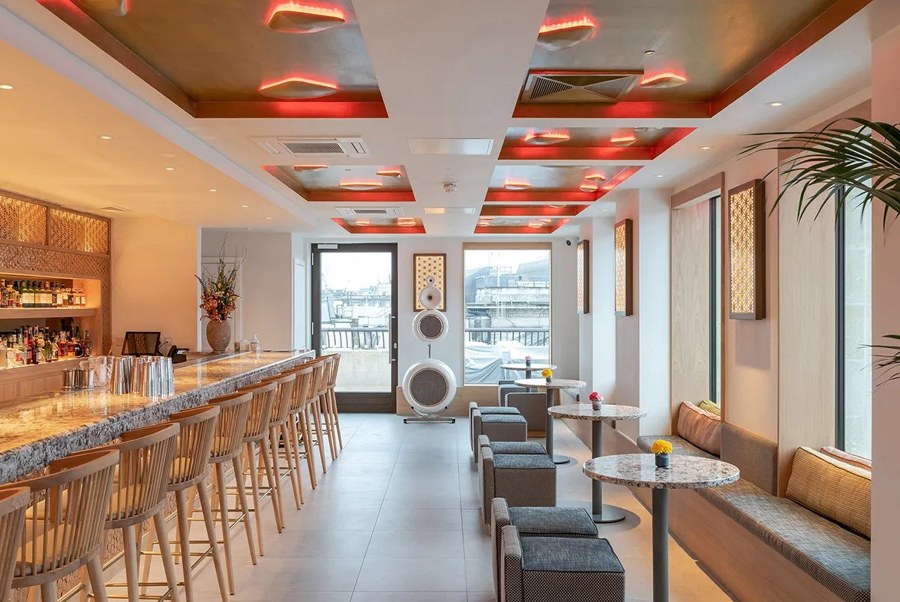
Architectural audio consultancy. Pequod Acoustics custom specification. Architecture by Ben Adams Architects.
As featured in Architecture Magazine
Where treatment does need to be seen, it should look intended. Fabric wrapped elements in the right colour, timber slat systems with absorption behind them, sculptural baffles and acoustic art can all carry real performance while adding to the design rather than hiding from it. The aim is for a guest to admire the very thing that is quietly solving the problem.
The real lesson: design it in, do not bolt it on
Every one of these works best when it is decided early, while the ceiling, the finishes and the layout are still open. The panels on the wall are what happens when sound was left until last. Bring acoustics into the design and the same performance arrives invisibly.
See how we approach restaurant acoustic design from the first drawing, or book an Audio Strategy Review.


